Services
Services
Paul Parker Consulting serves families, attorneys, agencies, policymakers, and media professionals across six practice areas — each grounded in over 30 years of direct experience inside the death investigation system, including four years leading independent in-custody death reviews as Executive Officer of San Diego County’s civilian oversight board.
Family Navigation Services
For families navigating the aftermath of an unexpected, unexplained, or contested death.
When someone you love dies under circumstances that raise questions, you are thrust into a system that was not designed to communicate with you. Investigations proceed on institutional timelines with no one assigned to explain to your family what is happening, what your rights are, or what the documents you eventually receive actually mean.
Paul serves as your guide through that system. He is not an attorney and does not provide legal advice. He is not a therapist, grief counselor, or mental health professional. He is a death investigation professional with over 30 years of operational experience who can tell you, in plain language, what happened — and what you can do next.
Expert Witness & Litigation Support
For plaintiff and defense attorneys in wrongful death, civil rights, and in-custody death litigation.
Death cases are among the most technically complex matters in civil litigation. The evidence is specialized, the institutions involved are opaque, and the gap between what actually happened and what the official record shows can be substantial. Attorneys who win these cases do so because they understand the medicolegal system well enough to challenge it — or defend it — on its own terms.
Paul provides expert witness services and litigation consulting in matters involving death investigation process, in-custody deaths, law enforcement-involved deaths, Medical Examiner/Coroner office operations, cause and manner of death determinations, and agency policy and procedure. He testifies for both plaintiff and defense. His foundation is over 30 years of operational experience across five major jurisdictions — combined with four years as the civilian executive responsible for independently reviewing every in-custody and law enforcement-involved death in San Diego County. He has seen these cases from the investigator’s side, the administrator’s side, and the independent reviewer’s side.
Litigation support services include:
- Case review and written assessment
- Expert report preparation
- Deposition testimony
- Trial testimony
- Consultation during case development and discovery
- Review of opposing expert’s methodology and conclusions
Subject matter expertise includes:
- Medicolegal death investigation standards, process, and practice
- In-custody and law enforcement-involved deaths
- Cause and manner of death determinations
- Medical Examiner/Coroner office operations, administration, and accreditation
- Death notification standards and failures
- Agency policy and procedure compliance
- Civilian oversight of law enforcement — independent review processes and standards
Training & Education
For law enforcement agencies, Medical Examiner/Coroner offices, legal professionals, healthcare providers, civilian oversight boards, and public groups.
Death investigation touches law enforcement, medicine, the legal system, and the families of the deceased — and the vast majority of professionals in each of those spheres have received almost no formal education about how the others work. That gap is where misunderstanding, institutional failure, and preventable harm begin.
Paul delivers training grounded in operational reality. He has worked inside every system he teaches about — from the patrol officer’s perspective to the department executive’s to the independent civilian reviewer’s. He does not teach from policy manuals. He teaches from what actually happens, and from what goes wrong when training is absent.
Training programs are available for:
- Law enforcement agencies and first responders
- Medical Examiner and Coroner offices
- Law firms and legal professionals (CLE credit available for eligible programs)
- Healthcare providers and hospital systems
- Civilian oversight boards and government agencies
- Insurance companies and risk management departments
- Community and public groups
Training topics include:
- Basic medicolegal death investigation — process, roles, and responsibilities
- Medical Examiner vs. Coroner — understanding the difference and why it matters
- In-custody and law enforcement-involved death investigation
- Death notification — standards, practice, and failure modes
- Reading the death certificate — what it says, what it doesn’t, and why it matters
- Autopsy, toxicology, and medical records — what legal professionals need to know
- Ethics in death investigation
- Customer service in death investigation
- Management and administration of a Medical Examiner/Coroner office
- Supervision, training, and wellbeing of medicolegal death investigation personnel
- Civilian oversight of law enforcement — for board members and administrators
- Testifying — the death investigator on the stand
- Talking about death in public — communications for non-specialists
- Covering death without getting it wrong — for journalists and media professionals
Training is available as webinars, half-day workshops, full-day intensives, and multi-day programs. Contact Paul to discuss training objectives and scheduling.
Policy & Legislative Consulting
For advocacy organizations, legislative staff, government administrators, and civil rights organizations.
Effective death investigation reform requires something rare: a practitioner who can speak to legislators and government administrators with operational credibility, who understands the policy landscape well enough to identify what will actually work, and who can translate the lived experience of families into the language of institutional accountability.
Paul has done that work. He is developing a two-tier independent framework for deaths involving public safety agencies, which will be the subject of a forthcoming book. He has engaged directly with California legislative committees and staff on in-custody death legislation, including AB 2257 and SB 519, and provided invited testimony before the California Assembly Public Safety Committee and the California Senate Public Safety Committee. He understands what good policy looks like, where current proposals fall short, and how to build reform arguments that hold up under institutional resistance — because he spent four years as the civilian executive responsible for holding one of California’s largest law enforcement agencies accountable for its in-custody deaths.
Policy and legislative consulting may include:
- Review and analysis of proposed legislation affecting death investigation or in-custody death oversight
- Independent oversight framework design and consultation
- Legislative testimony preparation and delivery
- Briefing preparation for legislative staff and elected officials
- Coalition and stakeholder strategy consulting
- Policy paper and white paper development
- Public comment preparation for regulatory proceedings
- Expert analysis of existing oversight systems and their gaps
Speaking & Media
For conference organizers, professional associations, academic institutions, government agencies, oversight bodies, and journalists and media producers covering death investigation, in-custody deaths, and criminal justice reform.
Death investigation is a field that shapes lives at scale — and yet it is almost entirely invisible to the public, the press, and even many of the professionals who work alongside it every day. Paul speaks to that gap. He brings over 30 years of operational experience inside the Medical Examiner and coroner system, law enforcement, and civilian oversight to every platform — and translates it into language that any audience can understand and act on.
Whether he is addressing a room of criminal justice professionals, a legislative audience, a journalism conference, or a general public audience grappling with questions about death, accountability, and institutional failure, Paul delivers with the clarity and authority of someone who has done the work — not just studied it.
Speaking engagements include:
- Keynote addresses for professional associations, conferences, and institutional events
- CLE-eligible presentations for attorney and legal professional audiences
- Educational presentations for law enforcement, oversight, and healthcare audiences
- Academic and university guest lectures
- Community and public education presentations
- Legislative and policy briefings
Media engagements include:
- Broadcast and print media — expert commentary and analysis on death investigation cases and policy
- Podcast appearances — death investigation, criminal justice, public health, and reform topics
- Documentary and long-form journalism consulting
- Technical guidance and background for journalists covering in-custody deaths, Medical Examiner/Coroner operations, and oversight failures
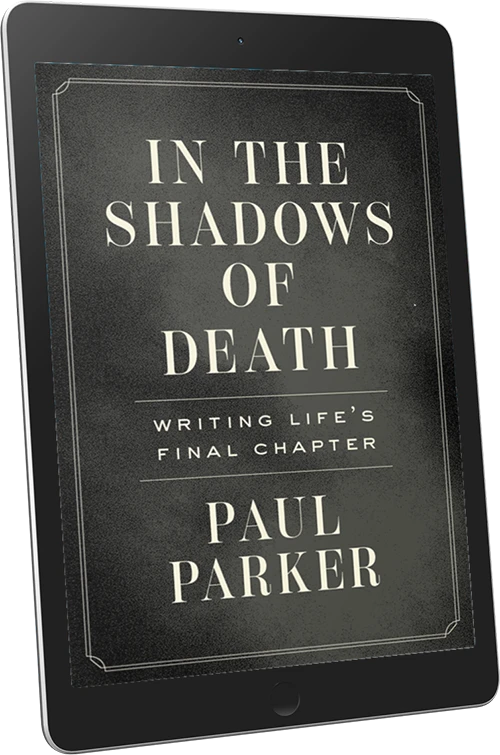
- Author interviews on In the Shadows of Death
Topics available include:
- How the Medical Examiner and Coroner system works — and where it fails
- In-custody and law enforcement-involved deaths — investigation, oversight, and accountability
- Civilian oversight of law enforcement — what it is, what it isn’t, and what it should be
- Death notification — the moment families meet the system
- Reading the official record — what death certificates, autopsy reports, and toxicology findings actually say
- Reform — what good policy looks like and what gets in the way
Agency & Organizational Consulting
For law enforcement agencies, Medical Examiner/Coroner offices, appointing authorities, and victim services organizations.
Institutional problems in death investigation do not announce themselves. They accumulate — in protocol gaps, communication failures, personnel practices that were never examined, and policies written for a different era. By the time those problems become visible, they have usually become liability, litigation, or a headline.
Paul consults with agencies and organizations to identify those vulnerabilities before they surface — and to build the operational standards, training infrastructure, and communication practices that prevent them. He has worked inside these systems at every level, from investigator to department executive to civilian oversight director. He knows where the gaps are because he has managed them, investigated them, and reviewed them from the outside.
Agency consulting engagements may include:
- Death investigation process review and operational audit
- In-custody death investigation protocol development
- Medical Examiner/Coroner office operations and administration consulting
- Accreditation pathway consulting
- Death notification policy and training program development
- Next-of-kin communication standards and practices
- Personnel wellbeing program development for death investigation staff
- Media relations guidance for death investigation matters
- Interaction protocols with law enforcement, hospital, mortuary, and public health personnel
- Civilian oversight board operational consulting and case review support
Ready to Get Started?

Join
My Mailing List
Join the Inside Death Investigation newsletter for analysis, updates, and public education on the medicolegal death investigation system.